Stats
Actions
Available In
Tags
Enables autonomous agent-driven development loops: scaffolds isolated cloud dev boxes per agent, generates one-command local dev stacks with dependency discovery, adds Playwright-based e2e suites with video evidence, creates file-based knowledge base workstreams, and verifies features via independent sub-agents that open PRs with proof.
Scaffold an isolated CLOUD dev box per agent (via crabbox + Daytona) for any codebase — the parallel-safe counterpart to dev-local-setup. Each agent gets its own full stack (own DB + dev server) and an in-box browser for e2e, so concurrent loops never collide on ports/state. Sets up the snapshot image, .crabbox.yaml, an idempotent setup.sh (also boots the stack locally), and a cbx.sh wrapper. Use when the user says "set up crabbox", "give each agent its own box", "add cloud testing", "make this repo testable in the cloud / on Daytona", "parallel-test this", or when setup-codebase-harness needs true per-agent isolation.
Scaffold a one-command `dev-local` launcher for ANY codebase. Investigates the repo to find its services, ports, and infra dependencies, then generates a single `scripts/dev-local.sh` (up/down/status/logs/restart) that runs every dev server in one tmux session, plus a short skill doc describing it. Use when someone says "set up dev-local", "make a one-command dev launcher", "I want one script to start this repo", "scaffold dev-local for this project".
Set up an end-to-end test suite in any repo, following practices that make e2e a reliable per-PR gate: real flows over bypass, layered assertions, a reusable auth/session helper, video+trace evidence, and a compounding suite. Use when a repo has no e2e (or weak e2e) and you want system-level tests — "set up e2e", "add end-to-end tests", "scaffold a test gate".
Spin up a new loop (domain) in a file-based knowledge base — bootstrap the substrate if it's missing, gather the loop's charter, scaffold domains/<loop>/README.md, then do ONE real test run and record it in the loop's Timeline and LOG.md. Use when the user says "set up a new loop", "create a domain", "start a new beat/workstream", or names a recurring job they want the agent to own.
Prove the feature you just built actually works — a fresh verifier sub-agent drives the real app — then open a pull request with the proof. Use when a change is ready to ship in any repo — "open a PR", "ship this", "raise a PR", "/pr". Never opens a PR until the feature is verified.
Own this plugin?
Verify ownership to unlock analytics, metadata editing, and a verified badge. GitHub access is read-only (username + org membership).
Sign in to claimOwn this plugin?
Verify ownership to unlock analytics, metadata editing, and a verified badge. GitHub access is read-only (username + org membership).
Sign in to claimBased on adoption, maintenance, documentation, and repository signals. Not a security audit or endorsement.
A Claude Code plugin marketplace of the skills we share at AI Builder Club for building loop engineers: agents that get triggered on their own, pick up work, ship it, verify it, and log what they learned, so the work compounds without you prompting every step. It's the productized version of the setup my team runs in production.
Two flagship skill sets (more to come):
The shift: you stop prompting a coding agent task-by-task, and start designing loops.
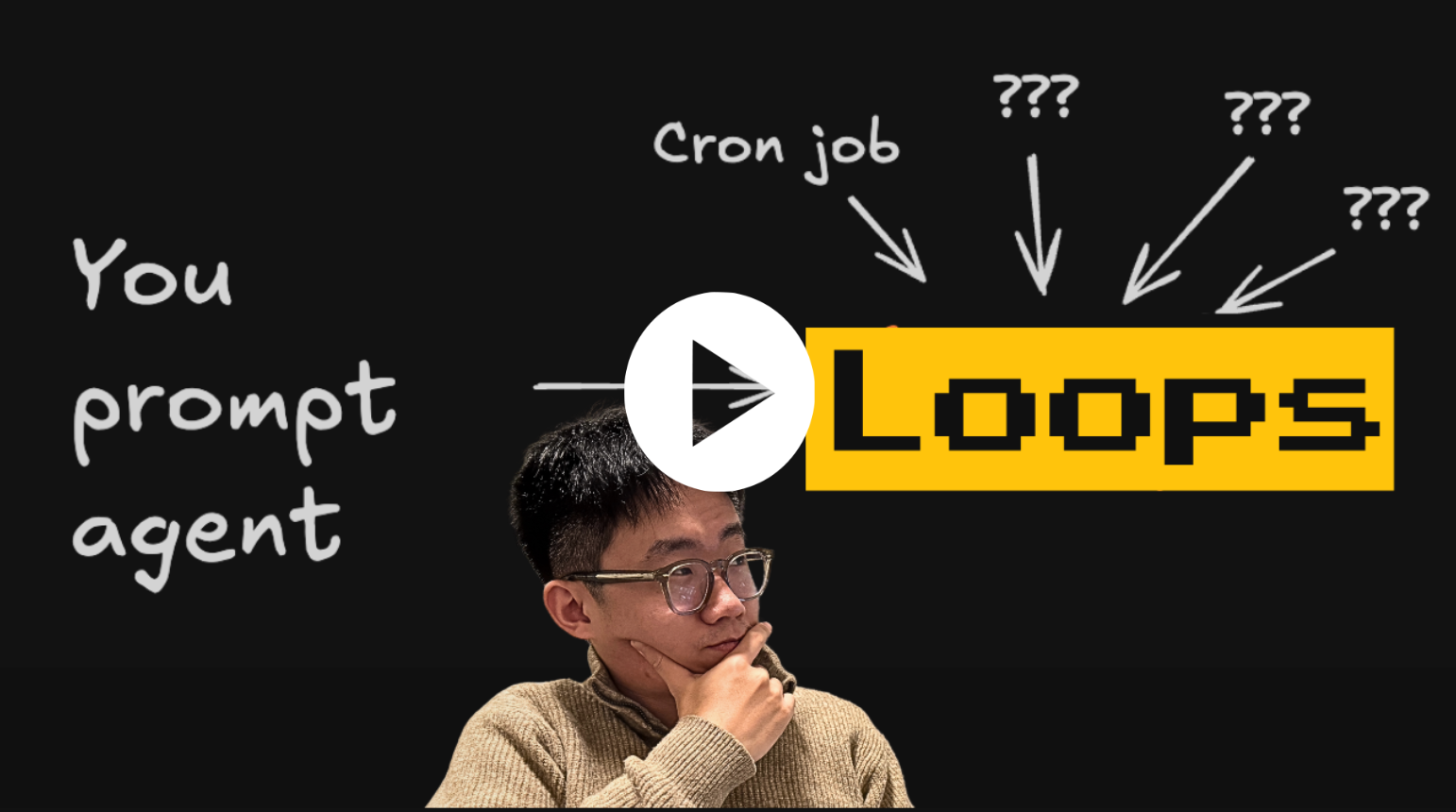
A loop is an agent that wakes up on a trigger (a cron, a webhook, an incident, another agent), does some investigation and work, and writes what it found and did into a shared, file-based memory. Next run it reads that memory and keeps going. The real power is compounding: many loops (support, SEO, product, ads) read and write the same folders, so a friction the support loop logs can get picked up by the product loop, and a keyword the ads loop finds can feed the SEO loop. One shared brain, many loops.
Building one comes down to four ingredients:
loops plugin.codebase-harness plugin.These plugins give you #2 and #4, plus the scaffolding to add the rest.
Want the full walkthrough of the concept and how my team designs compounding loops? Watch the video:
/plugin marketplace add AI-Builder-Club/skills
/plugin install skills@ai-builder-club
One plugin, all the skills below.
/setup-codebase-harness — make a code repo agent-readyRun it in the code repo your agents work in, so they can run, test, and verify their own work. It orchestrates the harness skills below — pull in only what the repo needs.
/new-loop — build your shared brainRun it where your agent's memory should live. First run bootstraps the knowledge base
(creates ARCHITECTURE.md, LOG.md, the signals/ docs/ domains/ folders, and a knowledge-base
section in your CLAUDE.md); then it scaffolds the loop, does one real test run, and logs it.
Run it again any time to add another loop.
Codebase harness — make a repo agent-ready
| Skill | Use it when… |
|---|---|
setup-codebase-harness | Onboarding a repo to agent-driven dev — the master that orchestrates the four below. |
dev-local-setup | You need a one-command local dev stack (scripts/dev-local.sh up). |
e2e-setup | The repo has no (or weak) e2e — add a real per-PR test gate. |
crabbox-setup | Loops ship code in parallel — give each agent its own isolated cloud stack (one laptop can't run N). The cloud counterpart to dev-local. |
pr | A change is ready — a fresh sub-agent proves the feature works, then opens the PR with proof. |
Loops — the shared knowledge base
| Skill | Use it when… |
|---|---|
new-loop | You want a new loop/workstream the agent owns (bootstraps the knowledge base on first run). |
After setup, each session the agent reads CLAUDE.md + the relevant domain README, does work,
writes artifacts, and appends to LOG.md. For code changes it drives ship-change and ships via /pr.
git. That's the only hard dependency for the knowledge base + harness.crabbox-setup (optional, for parallel cloud boxes) needs the crabbox CLI + a provider
(Daytona: daytona CLI / DAYTONA_API_KEY).npx claudepluginhub ai-builder-club/skills --plugin skillsloophaus — Control plane for coding agents
 vcz-Gray
Makes a repo agent-ready: AGENTS.md, boundary tests, CI pipeline, GC scripts — based on OpenAI's harness engineering methodology
 Gizele1
Tool-agnostic agentic coding setup: 29 agents, 53 skills, 67 rules, 30 commands, 7 hooks, MCP servers, and a CLI-tool surface generated for 3 AI coding tools from a single canonical source. Counts derived from governance/inventory.json.
 hatch3r
Automated development loop and ad-hoc workflow generation for orchestrating AI coding agents
 yorrick
Make AI coding agents follow a repeatable engineering workflow with memory, verification, skills, and multi-agent setup
 codeaholicguy
Autonomous multi-agent development framework with spec-driven sprints and convergent iteration
 jeremylongshore
'%20stop-opacity%3D'0.16'%2F%3E%3Cstop%20offset%3D'1'%20stop-color%3D'rgb(200%2C90%2C60)'%20stop-opacity%3D'0.03'%2F%3E%3C%2FlinearGradient%3E%3C%2Fdefs%3E%3Crect%20width%3D'320'%20height%3D'200'%20fill%3D'url(%23g)'%2F%3E%3Ccircle%20cx%3D'250'%20cy%3D'56'%20r%3D'92'%20fill%3D'rgb(200%2C90%2C60)'%20fill-opacity%3D'0.06'%2F%3E%3Ccircle%20cx%3D'64'%20cy%3D'172'%20r%3D'58'%20fill%3D'rgb(200%2C90%2C60)'%20fill-opacity%3D'0.05'%2F%3E%3C%2Fsvg%3E)