Stats
Actions
Available In
Tags

Capture human-side friction during development and manage a structured feedback loop via HUMAN.md rules and HUMAN_FRICTIONS.md logs, with commands to triage feedback entries and hooks for session identity checks and motivational nudges.
Record human-side friction from the recent work via the human-feedback skill.
Scaffold HUMAN.md (rules layer) and HUMAN_FRICTIONS.md (log layer) into this repository — the plugin route's equivalent of `install.sh --init`.
Triage open HUMAN.md entries — move them to adopted, obsolete, or merged.
Own this plugin?
Verify ownership to unlock analytics, metadata editing, and a verified badge. GitHub access is read-only (username + org membership).
Sign in to claimOwn this plugin?
Verify ownership to unlock analytics, metadata editing, and a verified badge. GitHub access is read-only (username + org membership).
Sign in to claimBased on adoption, maintenance, documentation, and repository signals. Not a security audit or endorsement.
npx claudepluginhub kawasima/ai-in-the-human-loop --plugin ai-in-the-human-loopEvolutionary naming skill — improve names step-by-step through 3 phases. Two modes: audit (exhaustive scan with phase classification) and improve (interactive single-target with phase-boundary safety gates).
 kawasima
Session feedback analysis - capture skill bugs, enhancements, and positive patterns as GitHub issues
 laurigates
Humanize - An iterative development plugin that uses Codex to review Claude's work. Creates a feedback loop where Claude implements plans and Codex independently reviews progress, ensuring quality through continuous refinement.
 PolyArch
GitHub-as-a-Context (GAAC) - A methodology for AI-native software development that uses GitHub Issues, PRs, and Projects as persistent context for LLM coding agents. Provides structured workflows from research to implementation.
 SihaoLiu
Metacognitive advisor that monitors Claude Code and provides feedback
 open-horizon-labs
Plugin for effective agentic development
 desplega-ai
AI-Driven Engineering workflow commands for managing issues, tasks, implementation, and PRs.
 SaschaHeyer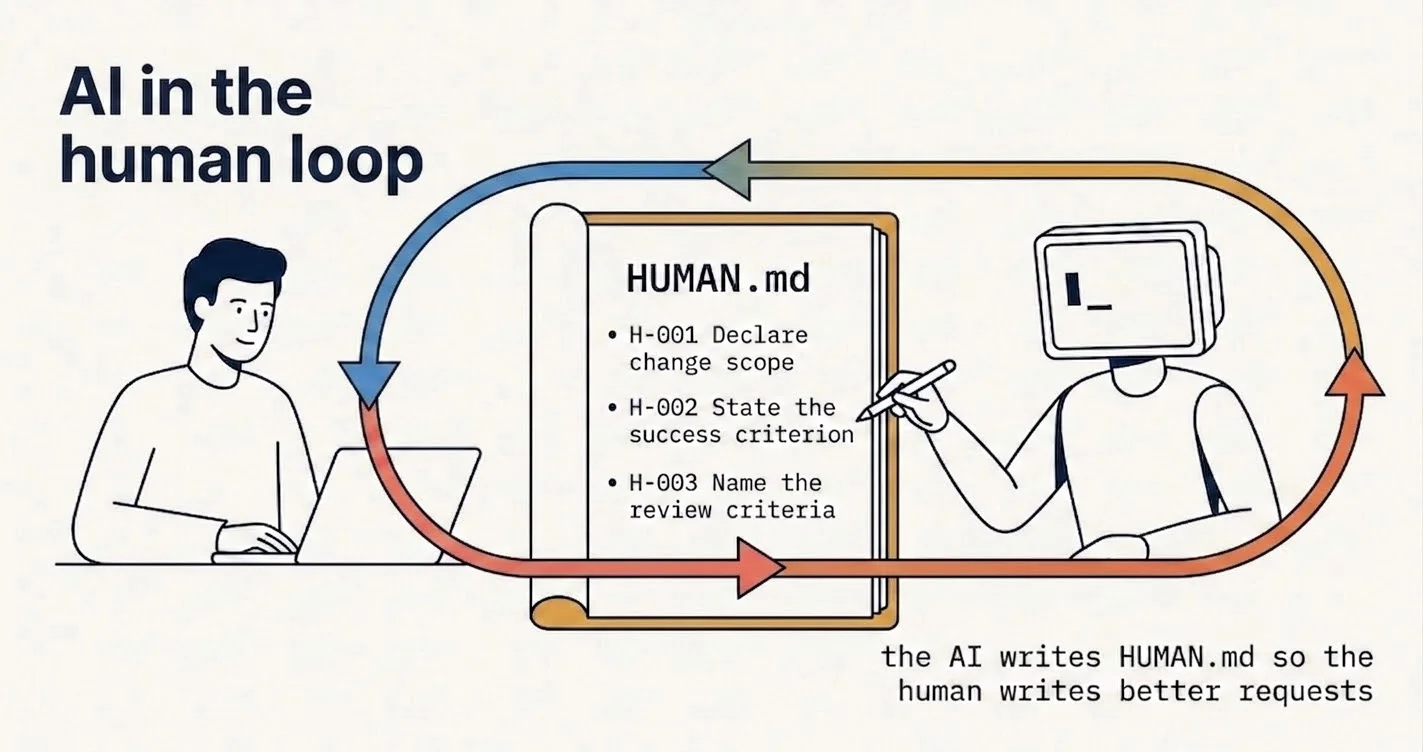
'%20stop-opacity%3D'0.16'%2F%3E%3Cstop%20offset%3D'1'%20stop-color%3D'rgb(200%2C90%2C60)'%20stop-opacity%3D'0.03'%2F%3E%3C%2FlinearGradient%3E%3C%2Fdefs%3E%3Crect%20width%3D'320'%20height%3D'200'%20fill%3D'url(%23g)'%2F%3E%3Ccircle%20cx%3D'250'%20cy%3D'56'%20r%3D'92'%20fill%3D'rgb(200%2C90%2C60)'%20fill-opacity%3D'0.06'%2F%3E%3Ccircle%20cx%3D'64'%20cy%3D'172'%20r%3D'58'%20fill%3D'rgb(200%2C90%2C60)'%20fill-opacity%3D'0.05'%2F%3E%3C%2Fsvg%3E)