Stats
Actions
Available In
Tags

A grab bag of hunches — experimental skills and plugin features tried here before they earn a place in hope or sound. Everything graduates or dies.
Restate the last message in plain human language, with no jargon.
Shape output for a human working through agents. Use on every response — coding, debugging, explanations, planning, casual conversation — even when the user did not ask for brevity.
Use when the user asks to explain or understand a code change, diff, branch, or PR — or to catch up on a change an agent built before reviewing or shipping it. Triggers on "what changed here", "walk me through what you built", "help me understand this before merging".
Use when the user wants knowledge delivered to an audience — slides, a deck, a diagram, an explainer for others, teaching or talk material — or shares existing content that isn't getting through.
Use when writing prose a human will read — docs, READMEs, PR descriptions, commit messages, code comments, chat replies, explanations. Not for code, identifiers, API names, error strings, or established technical terms.
Own this plugin?
Verify ownership to unlock analytics, metadata editing, and a verified badge. GitHub access is read-only (username + org membership).
Sign in to claimOwn this plugin?
Verify ownership to unlock analytics, metadata editing, and a verified badge. GitHub access is read-only (username + org membership).
Sign in to claimBased on adoption, maintenance, documentation, and repository signals. Not a security audit or endorsement.
Why introduce friction? Because YOU the human end up being the world model. The agent is just your hands.
moo/hope doesn't build, and doesn't author your code, rules, or taste. It works alongside build tooling like superpowers.
One idea runs through all three layers: never delegate a decision.
/plugin marketplace add saadshahd/moo.md
/plugin install [email protected]
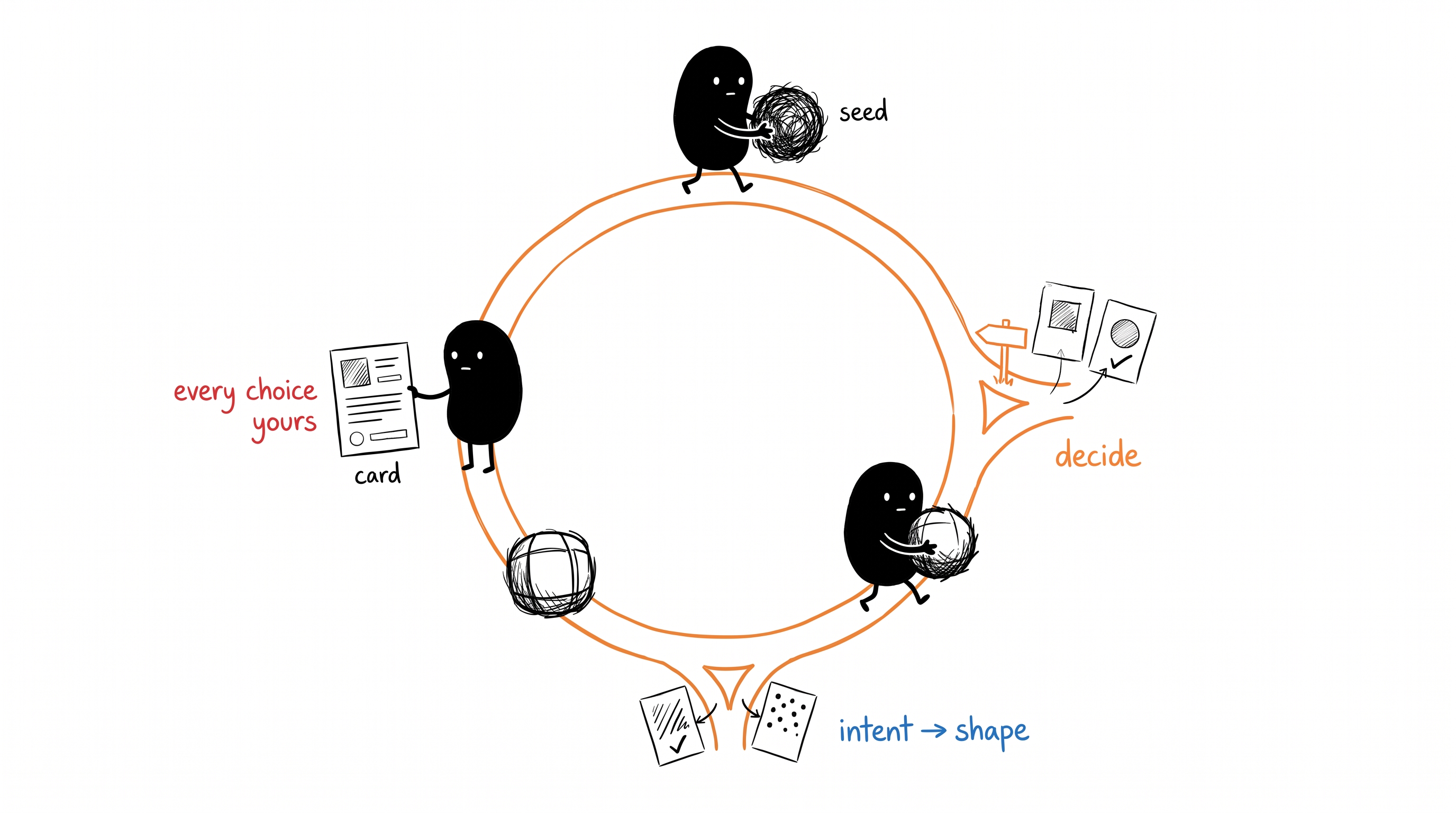
/hope:full <your seed>, or run the stages directly: /hope:intent <your seed> then /hope:shape <your intent>, each handing you a lean card./hope:delegate routes it to agents while you keep every decision./hope:freeze snapshots it as fact (never memory) before a stage builds on it./hope:over hands each load-bearing decision back so you reason it into your own model.The loop is pure decision work. You drive it slowly, in your own context.
Every piece of work starts as a raw <seed>, the rough thing you fully typed. It is the one artifact that is fully yours.
/intent and /shape do not make the seed more honest. They make it explicit and specified. Each surfaces a decision as an interactive question, every choice previewed, a few at a time, and you answer. Every added detail stays yours because you chose it. /intent turns the <seed> into a confirmed statement of what you want. /shape turns the <intent card> into a chosen approach before any code exists.
The outcome is a card you carry comfortably outside the context window.
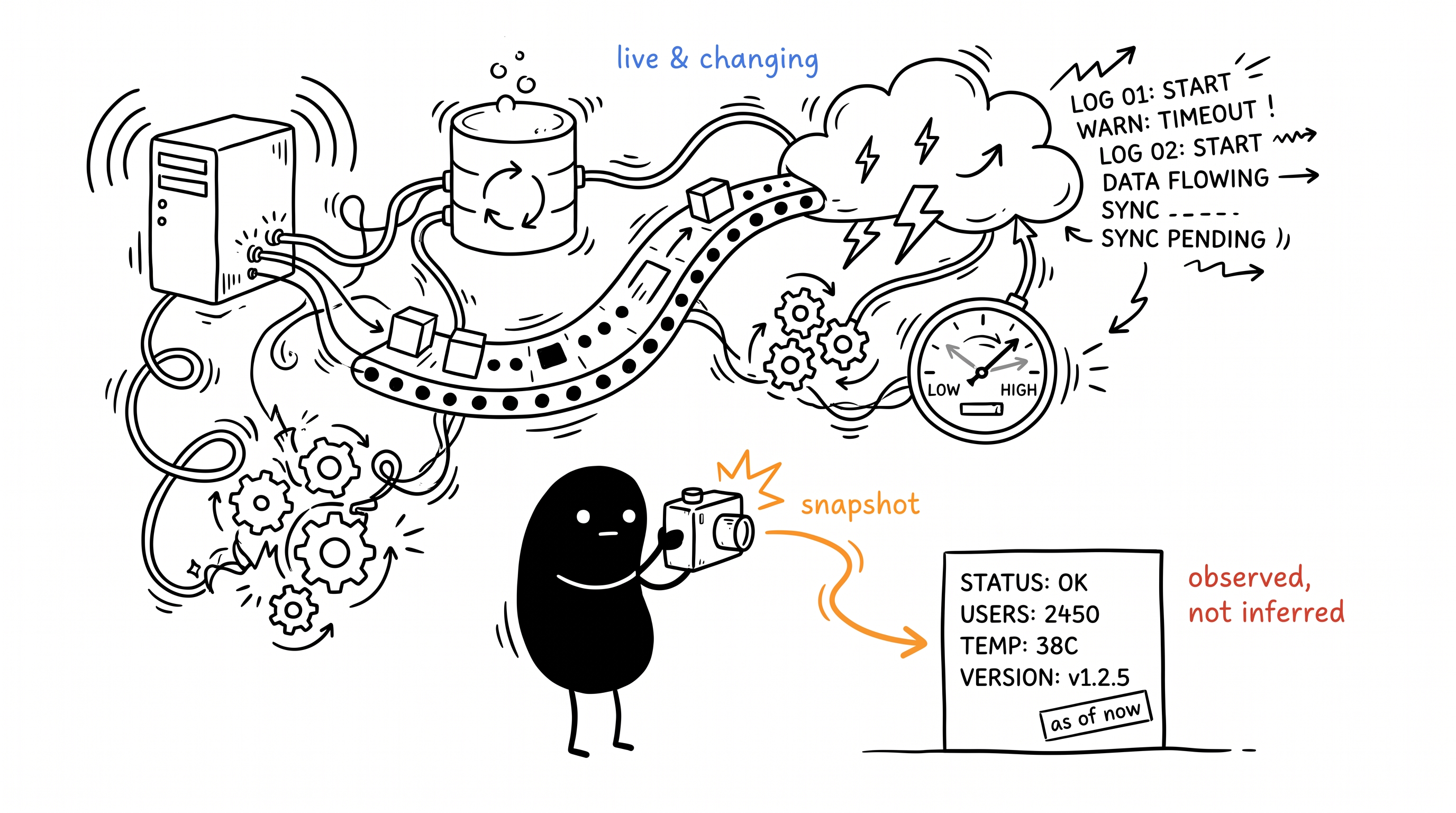
freeze anchors the work to what is observed, not what you remember. When a stage depends on state that lives outside the repo — a service, a database, a queue, live logs — that state keeps moving, and memory of it goes stale the moment you look away.
freeze snaps the slice your work touches into one immutable value: every fact observed live or named as an open gap, never inferred. The stages decide against a fact, not a guess. It is the ground the other three stand on — and repo-local work skips it.
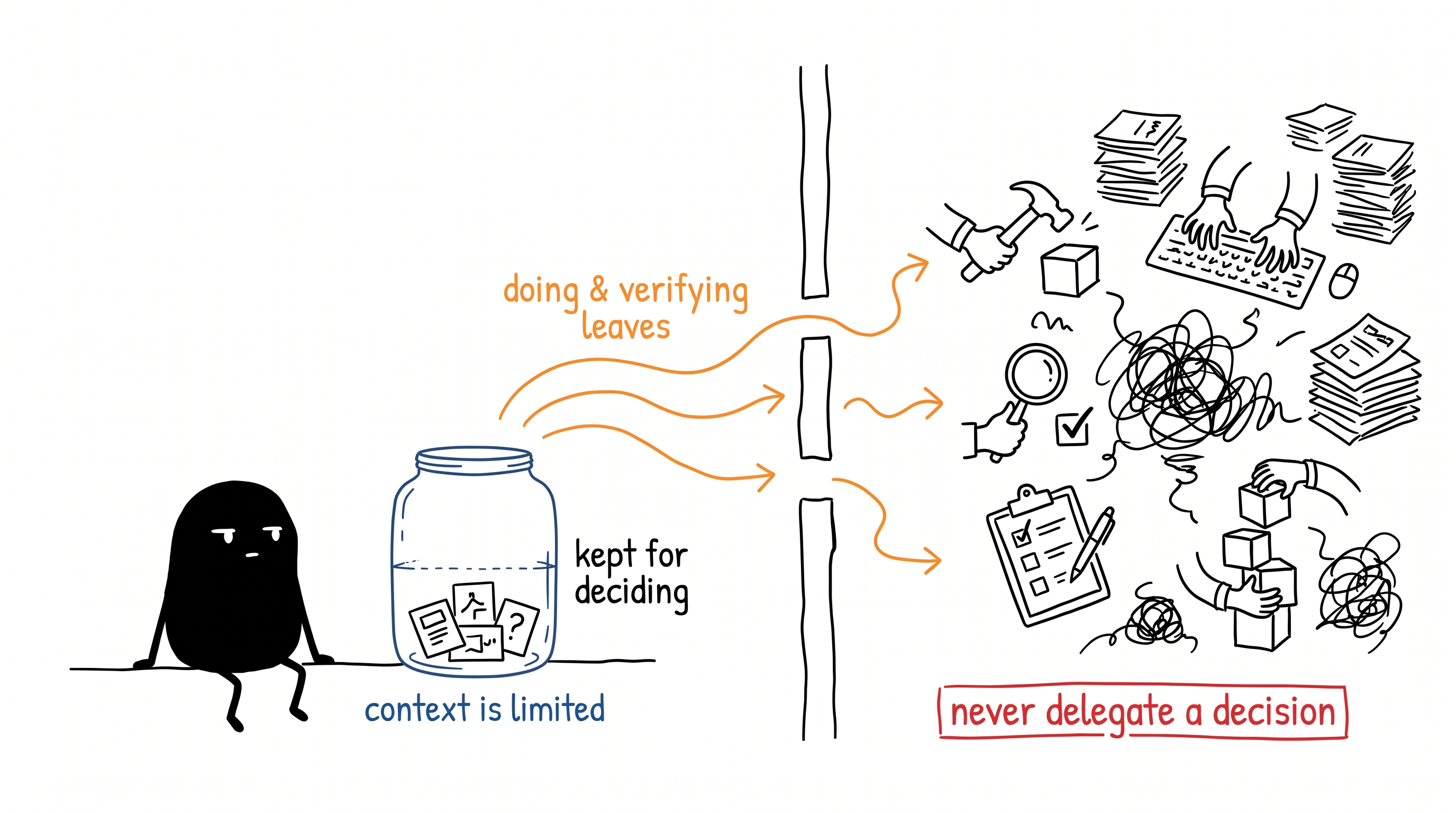
delegate is the line between deciding and doing.
You keep every decision. Each one is surfaced to you so you stay engaged. Only tactical, observable work fans out to agents: implement, test, verify, audit, explore.
This is also what stops compaction from silently rewriting your context. The verbose doing never enters your main thread, so it can never quietly mutate what you decided.
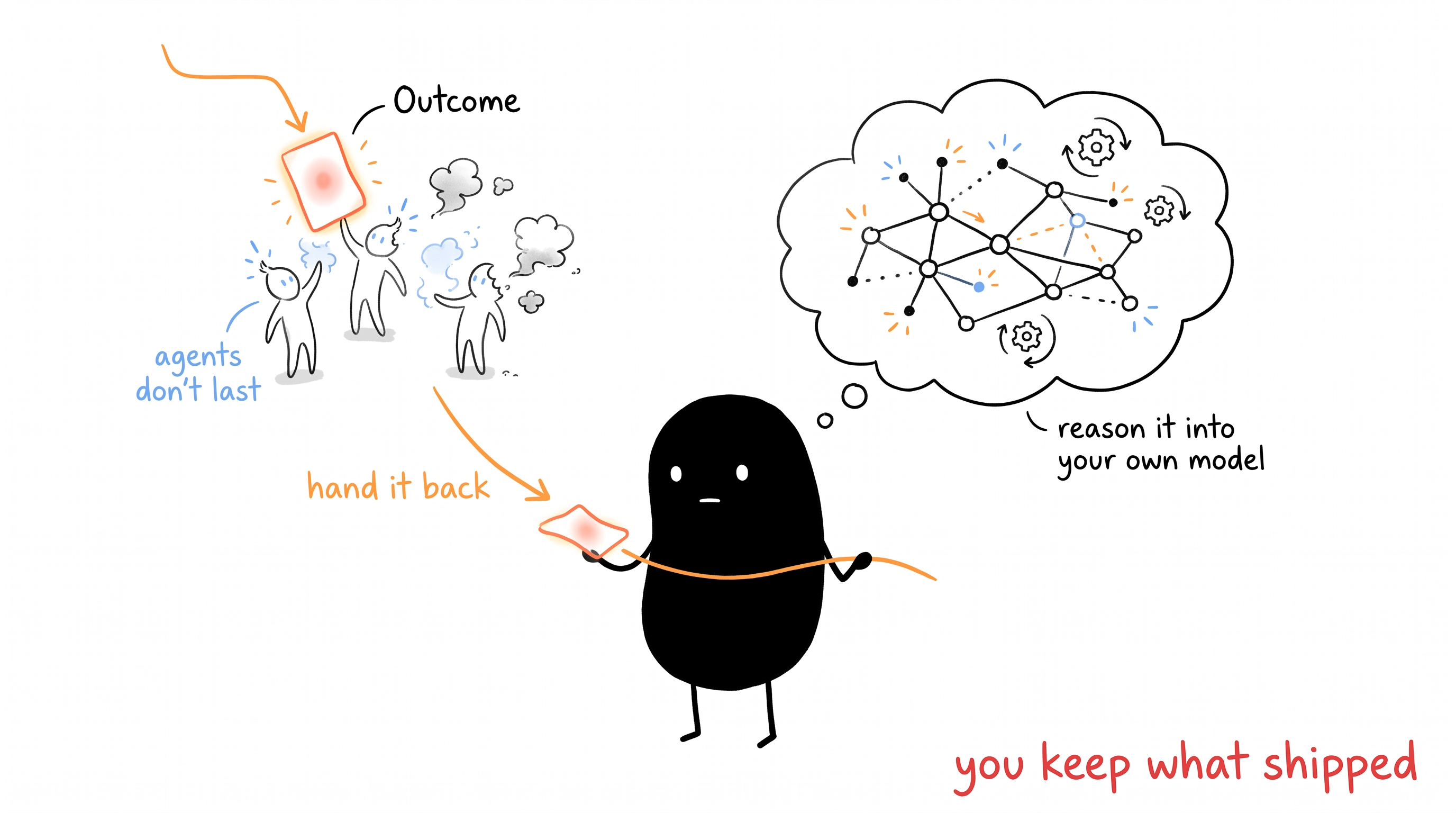
over hands a decision back the moment it lands — in-flow, as soon as the work is done, never banked to the end. The agents that did the work are short-lived; what they carried vanishes with them, so the decision has to come back to you right away.
Agents grow the codebase faster than they grow your understanding of it. That gap is the part you are accountable for. over closes it. It finds what was load-bearing and hands each decision back as one forward question — you reason it into your own mental model, it confirms once. A short conversation, no score.
What the agent never carries is what over hands back.
| The trap | Layer | Guard |
|---|---|---|
| AI fills in your decisions | /hope:intent & /hope:shape | interactive questions, each choice previewed |
| compaction mutates & drifts your context | /hope:delegate | doing stays out, deciding stays in |
| stale or remembered external state | /hope:freeze | snapshot facts, never infer |
| code grows faster than understanding | /hope:over | hand each decision back in-flow, you reason it into your own model |
Code taste as installable rules. Probe a repo's stack, select only the rules its code shows a surface for (evidence-cited per rule), confirm, and scaffold a browsable .claude/sound/ rule map (surfaced by the sound:prime skill). Installed rules are user-owned; re-runs reconcile.
 saadshahd
Thinking discipline for AI work. Clarify intent, shape approach, consult experts, compose teams, audit against principles.
 saadshahd
npx claudepluginhub saadshahd/moo.md --plugin hunchCode taste as installable rules. Probe a repo's stack, select only the rules its code shows a surface for (evidence-cited per rule), confirm, and scaffold a browsable .claude/sound/ rule map (surfaced by the sound:prime skill). Installed rules are user-owned; re-runs reconcile.
saadshahdProactive enhancement layer for AI agents — learns user patterns from any memory store, upgrades prompts into full intent, takes engineer-grade initiative that advances the goal instead of generic filler, predicts the next request, verifies everything before delivery, scans for AI slop, orchestrates subagents when available, onboards itself to any host on first run, and runs a self-improvement loop that sharpens its own heuristics. Universal adapter runs on Claude Code, Codex, Hermes, OpenClaw, opencode, Cursor, Gemini CLI, and custom loops.
 aievolutionpl
A no-nonsense goal workflow engine for Claude Code and Codex: turn a plain-English goal into tracked steps with plain-language decisions and evidence-based done.
 ShivamGupta42
Hypo-Workflow for Claude Code. The plugin namespace is intentionally `hw`; plugin-root commands map /hw:* to existing workflow Skills.
 HypoxanthineOvO
A discipline mode for complex/high-stakes work: staged planning, decisions-with-receipts, verify-against-source, parallel delegation, adversarial review — plus a self-armed autonomous goal loop (a deterministic Stop gate; the optional read-only Sonnet governor ships as the companion plugin tale-mode-governor).
 alicicek
Ultra-compressed communication mode. Cuts 65% of output tokens (measured) while keeping full technical accuracy by speaking like a caveman.
 JuliusBrussee
'%20stop-opacity%3D'0.16'%2F%3E%3Cstop%20offset%3D'1'%20stop-color%3D'rgb(200%2C90%2C60)'%20stop-opacity%3D'0.03'%2F%3E%3C%2FlinearGradient%3E%3C%2Fdefs%3E%3Crect%20width%3D'320'%20height%3D'200'%20fill%3D'url(%23g)'%2F%3E%3Ccircle%20cx%3D'250'%20cy%3D'56'%20r%3D'92'%20fill%3D'rgb(200%2C90%2C60)'%20fill-opacity%3D'0.06'%2F%3E%3Ccircle%20cx%3D'64'%20cy%3D'172'%20r%3D'58'%20fill%3D'rgb(200%2C90%2C60)'%20fill-opacity%3D'0.05'%2F%3E%3C%2Fsvg%3E)